
Business Waste Removal Highbury — Health & Safety Policy
This Health & Safety policy sets out the commitment of our commercial waste and rubbish removal operation to protect employees, contractors, clients and the public. The policy applies to all activities associated with our waste removal service area including commercial rubbish removal, office clearance, bin collection and transport of residual, recyclable and approved non-hazardous materials. Our objective is to reduce risk, prevent injuries and ensure compliance with applicable health and safety obligations. All staff must work in accordance with this policy and the procedures it references.This policy adopts the principles of risk avoidance, elimination where possible, substitution, engineering controls, administrative controls and personal protective equipment (PPE). It recognises that different waste streams and site environments require tailored controls. The policy is relevant to on-site operations, vehicle operations, depot handling and any temporary storage or transfer activity. Commitment to safe working is mandatory from senior management through to operatives and subcontractors.

Responsibilities and Accountabilities
The following key responsibilities are established to ensure effective management of safety across the rubbish company service area:- Senior Management: set policy, provide resources, ensure legal compliance and review performance.
- Operations Manager: implement safe systems of work, ensure risk assessments, arrange training and audits.
- Supervisors and Team Leaders: carry out site checks, enforce safe working practices and report incidents.
- Employees and Contractors: follow procedures, attend training, use PPE and report hazards or near misses.
Risk Assessment and Control Measures
Risk assessments are conducted before new contracts, site works or when processes change. Assessments identify physical hazards (manual handling, sharp objects, vehicle movements), chemical hazards (spillages, contaminated materials), biological hazards (waste containing organic contamination) and ergonomic risks. Control measures include segregation of waste streams, safe lift procedures, use of mechanical aids, signage, exclusion zones for vehicle operations and secure storage for materials awaiting collection. Safe systems of work and written method statements are provided where risks cannot be removed.
Training, Competence and Communication
All operatives receive induction training covering company policy, site-specific risks and emergency procedures. Training topics include manual handling, use of PPE, safe loading and unloading, spill response, correct segregation of recyclables and non-recyclables, and awareness of hazardous substances. Refresher training and competency checks are scheduled periodically. Clear communication channels, toolbox talks and documented briefings ensure staff remain informed of hazards and changes. Records of training and competence are maintained and reviewed as part of the audit process.Vehicle, Site and Equipment Safety
Vehicles and handling equipment used in the collection and transport of waste are inspected daily, serviced at recommended intervals and maintained in a safe condition. Drivers and loaders must ensure loads are contained and secured to prevent spill or falling material during transit. Traffic management plans are applied on-site to segregate pedestrians from vehicle routes and to manage loading bays. Mechanical aids such as compactors, tail-lifts and trolleys are used where appropriate to reduce manual handling. Permits to work apply to activities involving face-to-face loading within confined or high-risk environments.Hazardous and Special Waste Handling
Operations involving hazardous materials or special waste streams are controlled under separate procedures consistent with legal requirements. Only authorised personnel handle clinically contaminated, chemical or otherwise hazardous waste, and such materials are correctly identified, segregated, labelled and transported in approved containers. Where applicable, the company ensures appropriate documentation and waste transfer notes accompany special loads. Controls include spill kits, specialist containment, and emergency contact arrangements with relevant disposal facilities.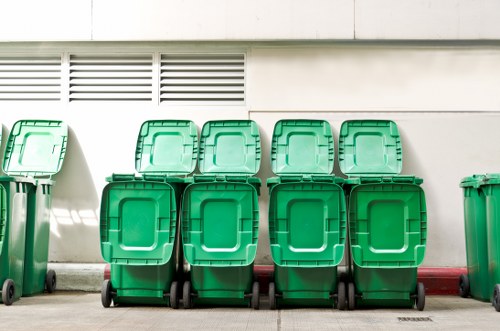
Incident Reporting, Investigation and First Aid
All accidents, incidents and near misses must be reported immediately through the company reporting system. Incidents are investigated to identify root causes and to implement corrective actions to prevent recurrence. First aid provisions are maintained at depots and on relevant vehicles, with trained first-aiders available during operational hours. Significant events are escalated to management and recorded in the incident register. Lessons learned are communicated to teams to strengthen controls.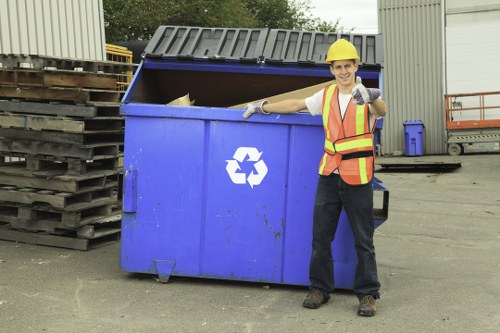
Monitoring, Review and Legal Compliance
Performance is monitored through inspections, audits, incident trend analysis and review of training records. The policy is reviewed at least annually or following significant operational change. We commit to meeting applicable statutory requirements and industry standards relevant to commercial waste removal and rubbish collection activities. Continuous improvement is driven by corrective action plans, performance targets and stakeholder feedback. Regular audits and management reviews ensure the effectiveness of the health and safety management system and its alignment with the operational needs of our waste removal service area.The company expects every person engaged in business waste removal activities to support this policy by working safely, reporting hazards and participating in safety initiatives. Compliance with these requirements is a condition of engagement and non-conformance may result in disciplinary action. This policy is supported by documented procedures, risk assessments and training curricula that collectively ensure safe, sustainable and compliant rubbish removal and commercial waste disposal services.
